We digitize business processes from process analysis to reliable operation. Together, we simplify manual workflows, connect existing systems, and develop digital workflows that are transparent, traceable, and ready for targeted automation.

Transformation

From manual workflow to digital business process

Manual

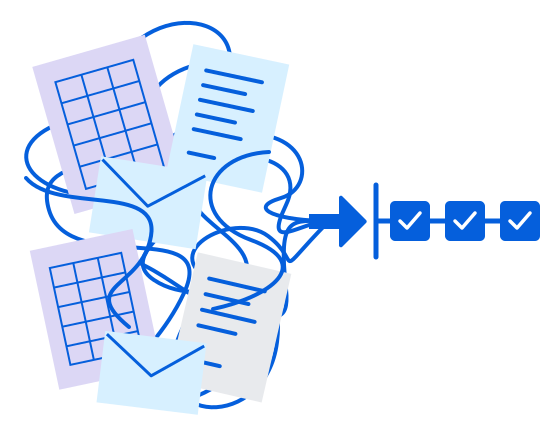
  • Processes are handled manually and take a lot of time.
  • Information is scattered across emails, spreadsheets, or people's heads.
  • Workflows are error‑prone because key steps must be carried out by hand.
  • Growth is limited because manual routines don't scale.
Process analysis Stable technologies Quality assurance

Digital

  • Recurring workflows are mapped consistently in a digital system.
  • All relevant information comes together centrally in one system.
  • Status, responsibilities, and decisions are transparent and traceable.
  • Teams save time because they no longer have to re-enter information across tools.

Two steps, one clear sequence.

Digitize or automate?

Process digitization creates the foundation for process automation. A business process is a repeatable sequence of steps: a request comes in, is reviewed, approved, and filed. In many organizations, the workflow jumps between paper, spreadsheets, email, and the printer. Each handoff requires people to re-enter information. This costs time and increases the risk of data being lost or changed unnoticed.

Digitization

Make business processes digital and transparent

Digitizing business processes means removing these manual handoffs and mapping the entire workflow in a central system. Status, responsibilities, and decisions no longer remain in individual inboxes or people's heads. They are up to date, transparent, and traceable.

Automation

Automate suitable process steps

Process automation builds on this foundation. Once a process has been mapped digitally, suitable steps can run without human intervention, for example transferring data, initiating approvals, or creating documents. Digitization makes the workflow traceable; automation then reduces manual work.

Recognize potential in everyday work

Which business processes can be digitized?

Recurring workflows with clear rules, manual handoffs between tools, duplicate data entry, or many participants are especially suitable. Frequent questions, unclear responsibilities, and missing status information are further signs that a digital process can create measurable value.

  • Requests and order processing

    Capture requests centrally, assign responsibilities, and keep processing status transparent from receipt to completion.

  • Reviews and approvals

    Route decisions to the right people, record feedback, and make approvals traceable without email chains.

  • Document and invoice workflows

    Collect documents consistently, validate required information, and transfer approved data without repeated entry.

  • Service and support processes

    Bring inquiries, context, deadlines, and communication together so that teams can respond reliably.

  • Data transfer between systems

    Connect ERP, CRM, document management, and line-of-business systems so that information remains consistent.

  • Field work and documentation

    Provide mobile access to tasks, checklists, evidence, and status updates wherever the work takes place.

From process analysis to reliable operation

How we digitize business processes

A digital workflow is sustainable only when it fits the people, data, and systems involved. That is why process analysis, simplification, and early testing come before broad automation.

  1. Analyze the current process

    Together with the people involved, we capture steps, roles, data flows, systems, exceptions, and manual handoffs between tools.

  2. Simplify and prioritize

    We remove unnecessary handoffs, clarify responsibilities, and prioritize the highest-value workflow.

  3. Model the digital target process

    Status, rules, permissions, data, decisions, and exceptional cases are mapped in a clear process model.

  4. Develop and integrate the solution

    We build a focused first version, connect the necessary systems, and make the workflow usable in everyday work.

  5. Introduce, measure, and automate

    After testing with real users, we improve the process and automate stable steps wherever it creates measurable value.

Digital workflows across system boundaries

Connect existing systems instead of replacing them

Digital processes do not have to live in a new isolated system. We connect ERP, CRM, document management, and line-of-business systems through existing APIs or carefully designed interfaces. This creates one coherent workflow while proven software can remain in use.

Reliable data across every handover

Interfaces transfer information without repeated entry, while clear responsibilities and validation rules protect data quality. Users see the status they need without switching between several applications.

Standard software or a custom process solution?

Standard workflow or process management software is suitable when an established process pattern fits. Custom software is worthwhile when specialized rules, roles, interfaces, or a business-critical workflow cannot be mapped cleanly with a standard tool.

When a workflow spans several user groups or organizations and becomes a shared system, our service for platform and portal development brings roles, data, and end-to-end processes together.

Make improvements measurable

Benefits of digital business processes

Shorter throughput times
Tasks, information, and decisions reach the right place without avoidable waiting or searching.
Fewer transmission errors
Data is captured once, validated consistently, and reused instead of being copied between media.
Transparent processing status
Everyone involved can see what has been completed, what is pending, and where action is required.
Clear responsibilities
Roles, deadlines, and handovers are defined in the workflow instead of depending on individual knowledge.
Scalable workflows
Growing case numbers can be handled without increasing repetitive manual work at the same rate.
Traceable decisions
Approvals, changes, and process history remain documented for quality assurance and audits.

Before implementation, we define the indicators that matter for the process, such as throughput time, error rate, status inquiries, or manual work steps. This makes the effect of process digitization visible.

What clients often want to know.

Frequently asked questions

Which business processes are suitable for digitization?

Processes are especially suitable when they occur frequently, require repeated data entry, involve many handoffs, or regularly cause delays and errors. We assess expected time savings, transparency, data quality, and implementation complexity to prioritize the best starting point.

Do we have to replace our existing systems?

Usually not. We first check whether ERP, CRM, document management, and line-of-business systems can be connected reliably. Replacement is considered only if a system has no viable interface, creates security or data-quality risks, or can no longer be maintained reliably.

How does a process digitization project begin?

We start with a workshop and process analysis together with the people who use the workflow every day. The result is a shared process map, prioritized pain points, target indicators, and a clearly defined first implementation stage.

How long does it take to digitize a business process?

The duration cannot be estimated reliably without understanding the workflow. It depends on the scope of the process, the systems involved, and the number of roles and exceptions. After a focused process analysis, we define a manageable first stage that can be tested in everyday work.

What determines the effort required for process digitization?

The main factors are the complexity of the workflow, interfaces to existing systems, data quality, permissions, security requirements, and necessary automation. We make these dependencies transparent before development and prioritize the scope together.

Can a business process be digitized step by step?

Yes. A focused first workflow often creates value faster and reduces implementation risk. We start with the highest-value workflow, gather feedback from the people involved, and then add exceptions, integrations, and automated steps in a controlled way.

How are employees involved in process digitization?

The people who run the process contribute their practical knowledge from the start. They validate the process map, test early versions in realistic scenarios, and provide feedback for the next stage. This makes the solution easier to use and keeps important exceptions from being overlooked.

How do we measure the success of process digitization?

Before implementation, we record a baseline, define a target value, and assign responsibility for measurement. After launch, we review the results at agreed intervals and combine operational data with feedback from the people who use the process. This shows whether the change works in everyday practice and where the next improvement should begin.

Ready to digitize your processes?

Let's discuss how we can simplify your workflows, digitize them reliably, and selectively automate suitable steps.

Portrait of Sebastian Müller
Sebastian Müller

Trusted by

Please give us at least one way to reach you: email or phone.

By submitting you agree to our privacy policy. We only use your data to answer your request.